"The most beautiful thing we can experience is the mysterious" ~ Albert Einstein

Topics

Showing posts with label Books. Show all posts

Sunday, August 18, 2013

Supernormal by Dean Radin


I recently enjoyed reading Dean Radin's new book.   Since my intention with this blog post is to mainly share some of the information I found fascinating, think of this entire blog post as being covered by one gigantic footnote, referencing Dean's book, which is also linked by the image above.*

I really liked the angle Dean took in this new book.  It seems like some folks interested in parapsychology, or psychic phenomenon (psi), don't seem to have a desire to learn about mythology, or even seem to have an aversion to religion altogether.  I can't say I blame them, as many modern Western religious groups have an aversion to psi.  It's really too bad, because psi is mentioned in many ancient texts in the East and amongst more mystical traditions in the West, even in modern-day times.  In fact, even fundamentalist Christians acknowledge the existence of psi, but it's only allowed to happen in one person - Jesus.  Jesus performed remote healing, telepathy, mind-over-matter and other "miraculous" acts, very much in accord with what is talked about in modern day psi research, albeit at a far lower level of manifestation.

The religious text that most explicitly talks about psi is probably the Yoga Sutras by Patanjali.  Held to be written approximately 2000 years ago, perhaps 2nd century BC, the oral traditions are believed to go back much, much further.  Images of figures in a yoga posture have been found on archeological artifacts dating back much further, as well.  Within the Yoga Sutras, certain abilities are outlined in rather explicit detail, which one is said to gain via concerted mental efforts.  These abilities are called Siddhis and they correspond very well with modern day psychic abilities, such as telepathy, mental healing, clairvoyance, psychokinesis and others.

I appreciate Dean Radin tying modern day psi research back to these ancient traditions.  I feel it adds credence to the overall psi phenomenon when what is being validated by modern scientific method today has been talked about for thousands of years.  The more robust and consistent an observation, the more likely it is a real phenomenon.  In addition, our materialistic cultures seem to have lost some of the mental apparatus for gaining psychic ability, so these ancient traditions can tell us how great our potential is.  In fact, the cycle of progress often seems to take the form of re-gaining something of old in a new, more powerful form.

Anyhow, Dean Radin isn't likely to win a Pulitzer Prize in literature anytime soon, but his books are always insightful and an entertaining read.  He is one of the leading psi researchers in the field and his books typically have some of the latest and greatest research mentioned, as well.  So, I plan to just cover some of the more interesting tidbits mentioned in his book.  Hopefully, these tidbits will be tantalizing to others, as well.  I'll also cover a small selection of the experiments covered in the book that I found especially interesting.  A link to a longer list of published studies can be found at the bottom of this blog post.

Yoga Sutra 1:12

Early on in the book, Dean talks about how stories are found in the lore of every culture about a repeatable human experience, often called the mystical experience, where one attains to an experience of the Divine, or a direct knowing of something that is ineffable, which is later identified as the ground of all being.  Aldous Huxley called this Perennial Philosophy, which later became the title of his well known book.  Dean quotes Alan Watts, who also noted this

"... single philosophical consensus of universal extent.  It has been held by men and women who report the same insights and teach the same essential doctrine, whether living today or six thousand years ago, whether from New Mexico in the Far West or from Japan in the Far East"

I recently spoke about an aspect of this experience in my Middle Way blog posts Part I and Part II, though mostly talked about in Part II.

After discussing this common experience, Dean mentions William James' definition of the mystical experience, which I hadn't heard of before, but found rather insightful.  He says a mystical experiences is comprised of the following four elements, or qualities:

(1) Ineffability, which means the experience is beyond something that can be put into language, or words.  It is only through having the experience, that one can truly understand.

(2) Noetic, which means the experience is one of a state of knowledge, or illumination, or a revelation.  One has a greater awareness of reality after the experience, than before.

(3) Transiency, which means the experience transcends time.  The experience may only literally happen over a few minutes, but may seem far longer, or even vice-versa. 

(4) Passivity, which means the state may have been brought about via efforts of the experiencer, whether through meditation, or some other discipline, but once the experience begins, it proceeds as if the experiencer is no longer in control, at least not completely.  After all, how can one control the contents of a revelation?

Dean also gets into the discussion of why psi is taboo and on the possible reasons for such intense skepticism, even though psi has been demonstrated to be real to modern scientific standards.  Even Richard Wiseman has admitted that all psi phenomenon meet the usual standards for a normal claim.  However, I'm going to avoid talking about most of that, except for a new angle I hadn't heard of before and how it relates to funding for psi research.

You may have heard of the Myers-Briggs personality type test.  As it turns out, people that are more creative, or likely to have a psychic experience, or even being open to having a psychic experience, typically are a type called NFP - N for intuitive, F for feeling, and P for perceiving.  However, 99% of top executives are what you might call the opposite type, or STJ - S for sensing, T for thinking, and J for judging.  These are the types that are less oriented towards "touchy-feely" kind of experiences like psi, so there is potential for bias right from the start.  Since these folks predominantly control the power and funding, this bias affects not only psi, but also other areas like alternative medicine, which suffer from similar taboos.

Large Hadron Collider (LHC)

Since psi is a small effect that is typically not under conscious control of the test subjects, its existence is validated to a large extent by statistical analysis.  However, this is not at all unusual in science.  As I mentioned in a previous blog post here, the Higgs particle recently discovered at the LHC was not directly detected.  It was only by analyzing a large enough amount of data that gave odds against chance of 1 million to 1 that the result was a statistical fluke, which finally gave scientists the confidence to proclaim an "official" discovery.  Even Aspirin was released to the market for its heart benefits on similar statistical grounds.  Anyhow, try and remember that 1 million to 1 figure!!

Before we dig into some of the modern-day experiments confirming the existence of Siddhis, we need to define a few terms.  The first two are technical terms dealing with statistical analysis.

Meta Analysis: a type of analysis useful for systems that are complex, variable and/or subtle, to such a degree that it is very difficult for a single experiment to provide persuasive evidence that a consistent phenomenon, or effect, is occurring.  Instead, a strictly defined set of methods is used to combine data from many studies, making the statistical equivalent of one single, gigantic study.  Meta analysis helps us to gain high confidence in small effects found within large, complex and variable systems.

Effect Size:  more, or less, determines how "big" an effect is.  A small effect size means that only a tiny fraction of the observations can be explained by the effect in consideration.  Small effect size does not at all imply a certain phenomenon is any less real.  Statistical analysis like the above mentioned meta analysis can help us pin down the uncertainty of a small effect size, giving us a high degree of confidence the effect is real, albeit small.  An example provided by Dean of a real, but small effect size, comes out of the pharmaceutical industry.  The effect size of the relationship between tamoxifen ( a breast-cancer drug) and clotting is only 0.01, meaning only 1% of folks taking this drug may experience a blood clot.  However, the downside of an occurrence is so catastrophic for the patient, this tiny effect size is taken very seriously.

The next four terms deal with terms used in the Yoga Sutras.

Dharana: is essentially concentration, but a steady, sustained form focused on a single object, or concept

Dhyana: is essentially meditation, consisting of prolonged levels of concentration, with higher levels of absorption and awareness.

Samadhi:  is a state where the object being concentrated on and the subject doing the concentrating merge in mystical absorption, or a state of unity, which is a hyper-aware, blissful state.  The absorption of subject/object and seeming loss of individual identity is usually viewed as a loss by an ego-bound personality.  However, for those that can break free and achieve this state, it is described as a state of incredible richness and activity, to which normal waking consciousness cannot begin to compare.

Samyana:  a combined effort of the Dharana, Dhyana, and Samadhi, resulting in inner transformation.  When one can practice Samyana on certain objects, or concepts, it is here that the Siddhis are gained - but, not to be experienced just transiently, as a fluke, but to be used at will in full strength.  However, it should be stated that within Yoga it is advised to ignore the Siddhis, as they can be become stumbling blocks by re-inflating the ego.

One can now perhaps appreciate why psi is very subtle in the laboratory and is often considered a small effect.  Few people are capable of keeping their mind focused for 10 mintues, let alone practice Samyana at will for indefinite lengths of time.  Imagining the amount of concentration required is enough to give most folks a head ache just thinking about it.  Therefore, it is very difficult to find subjects that can perform Siddhis (psi) at will in any appreciable way.  What modern day experiments seem to be finding is that this potential does exists in all of us at a mostly unconscious level and shows up as a small effect in the world at large.

Precognition

Now that we got those definitions out of the way, let's look at some experiments.  The first few will deal with precognition, which correspond with Sutra 16, in Book III, of the Yoga Sutras, which basically says one can gain knowledge of the past and future by practicing Samyana on the changes in Samskara, or mental impressions.

Zener Cards

Perhaps the most simple type of precognition experiment are the forced-choice experiments.  The classic example is among one of the first major psi experiments, which was conducted by Joseph B. Rhine and colleagues at Duke University.  The experiment basically consists of card "guessing" using a set of 5 cards called Zener cards (named after psychologist Karl Zener).  Of course, if the participants were really just guessing, we would expect an outcome from the experiment that matches chance expectation.  With 5 cards, they would only get a right answer 20% of the time.  The larger, and larger, the data set taken the more the results would converge upon 20%, with greater and greater confidence.  What one finds instead is something above chance results, telling us that the participants are getting hits, or correct "guesses", more often than they should based on chance alone.  In fact, a meta analysis of 309 forced-choice experiments showed odds against chance of 10^25, or ten million billion billion to one!

Another kind of experiment along these lines are called "free-response" experiments, which basically test whether, or not, an individual can foretell the future like in the force-choice, but here they are allowed to freely report an impression they receive, which are then matched to a hit/miss.  One example of this kind of test was performed by Princeton Engineering Anomalies Research (PEAR) laboratory.  The "percipient" was separated by 2,200 miles from an "agent" who would travel to a randomly selected location, which the percipient would try to determine beforehand. Without getting into the details, many free-response precognition experiences have been done, but the bulk come from two large sources.  The first source is a partially declassified government program involving Sciences Applications International Corporation (SAIC) and Standford Research Institute (SRI).  The second source was PEAR.  The 770 free-response tests conducted at SRI resulted in odds against change of 300 million to 1.  At SAIC, 445 tests resulted in odds against chance of 1.6 million to 1.  Finally, at PEAR, a total of 653 sessions resulted in odds against chance of 33 million to 1.

Another precognition experiment and one of my favorites is the presentiment tests that have done utilizing skin conductance, or even reactions within the eye, such as pupil dilation, spontaneous blink rate and simple eye movements.  In one example, test subjects are shown a series of randomly selected images.  Some of the images are calming scene, while others are of a more stimulatory nature, either erotic or violent.  In between each image is a set of time called a cool-down period where the reaction from the previous images can come back to equilibrium.  There is a definite an obvious spike in skin conductance from the erotic and violent images, which is entirely what one would expect.  What is surprising is that a pre-stimulus response is found before the image is actually shown!  It appears as though the test subject is unconsciously responding to a shocking stimulus before actual sensory perception.  One particular test involving 47 participants contributing to a total of 1400 trials and odds against chance of 2500 to 1.

A certain flavor of Quantum Mechanics called Time Symmetric Quantum Mechanics is a bit suggestive of precognition, in that it seems to allow a type of retro-causal influence to travel backwards in time (without violating causality, mind you!)  You can be read more about this in the following Discovery article.

Dean covers several other types of precognition experiments and also mentions a meta-analysis of 26 studies showing odds against chance ranging from 17 million to 1 to 370 billion to 1. The 17 million figure corresponds to a conservative estimate, which assumes the presentiment effect varied randomly from one experiment to the other (probably more realistic), while the 370 billion did not.

Overall, this all shows robust evidence in favor of the Siddhi mentioned in Sutra 16, in Book III, of the Yoga Sutras, to be a real effect.


Telepathy

Telepathy is a mind-to-mind connection, or communication, without the assistance of the 5 senses, and potentially over great distances.  This is a another Siddhi mentioned in Sutras 19-20, in Book III, of the Yoga Sutras, which says through another practice of Samyana one can gain knowledge of other's minds.

Test Subject in a Ganzfeld Experiment

Perhaps, my favorite example of this is the Ganzfeld set of experiments.  Dean talks about this at some length and I have also talked about it on a previous blog post, which I will quote here for convenience:

"Probably the most popular and perhaps the most conclusive experiment, or set of experiments, showing this effect is called the Ganzfeld.  Essentially, two people are separated in two different chambers that are electromagnetically shielded.  One is the receiver, one is the sender.  The receiver is in a dark reddish-light, with eyes covered and wearing headphones that apply white noise (i.e. they are sensory "starved").  The sender is given an image, which is part of a set of 4 visually disparate images, all randomly selected via computer from a large database of images. This is done in a double-blind fashion so nobody knows what the image will be beforehand, even the experimenters.  The sender mentally sends the image and the receiver is instructed to tell what impressions he/she is receiving.  Later, an image is chosen from the four visually disparate images that fits the impressions recorded.  If there was no effect and this was due to random chance, one would expect a hit rate of 25%.  The value being converged upon after performing a meta analysis of many replications across different labs is 32%, indicating more correct choices than random chance would predict. That doesn't sound like much, but it turns out to be a highly statistically significant result ...

.....  the meta-analysis for the Ganzfeld indicates roughly a 6-sigma significance.  To be a bit more precise, the Storm (2010) meta-analysis indicates approximately 46,948,356 to 1 with outliers removed and 8,695,652,173 to 1 without outliers, that the 32% hit rate is due to random chance, which implies rather strongly something real is happening.  This is an order of magnitude stronger than the data for the Higgs, at the time of their original announcement "

Dean goes on to talk about other telepathy experiments that once again provide evidence for the Siddhi mentioned in Sutras 19-20, in Book III, of the Yoga Sutras, to be a real effect.


Psychokinesis

Psychokinesis is basically an interaction of mind over matter, whereby mind can effect matter, on either a micro-scale or a macro-scale.  Psychokinesis is mentioned across several Siddhis.  I'll talk mainly about the experiments that correspond closest to Sutras 44-45, in Book III, of the Yoga Sutras, which involves mastery over the elements. Dean talks about the others in his book.

A rather extreme, albeit mythical, example of PK: Moses parting the Red Sea!

An experiment of Dean's that always intrigued me was setup to determine if the results of the famous double slit experiment could be effected via mental influence.  This is, or at least has the potential to be, related to the quantum measurement problem.  Quantum entities, like a sub-atomic particles, do not seem to posses definite properties before the act of measurement.  Rather, they seem to exist in a superposition of potentialities, which is represented mathematically by the wave function.  For example, an electron may exist in a superposition of spin up and spin down, and it is only upon the act of measurement that forces the electron to choose one, thereby collapsing the wave function to that specific value.  Quantum Mechanics says all we can know is the probabilities of obtaining each possible result, which is encoded within the wave function and can be experimentally confirmed by measuring an ensemble of identically prepared systems.  This has been done to very high degrees of precision.

In the interest of brevity, I won't get into the details, but Quantum Mechanics presents a mystery when it comes to the relationship between this collapse of the wave function and the observer.   It was once a semi-popular idea that consciousness itself may cause the collapse.  This seems to be too simple of a picture these days, but the observer still plays a profound and deep role in the reality presented by QM, which we still don't understand today.

The double-slit experiment is a simple example of the quantum weirdness involved with measurement.  Basically, what we think of a single particle. like an electron, appears to go through both slits at the same time, as if it were a wave, as long as "nobody is watching".  This is where the famous concept of wave-particle duality comes from.  However, if one obtains any which-path information, which is another way of saying attempting to gain knowledge on which slit the particle goes through, the particle collapses and goes through a specific slit. An example would be putting a detector at one slit to "spy" on the electron.  It would seem like any attempt made by an experimenter (a conscious being) to obtain which-path information always effects the way the a quantum system behaves.

Dean's experimenter put a twist on this.  He aimed to see if mental influence over a distance could effect the results of the quantum double slit experiment.  He had trained meditators try to mentally push more photons through one slit than the other.  A group of non-meditators was used as a type of control group for comparison.  A series of experiments were performed and each time the meditators achieved results with odds above chance to a significant degree, while the non-meditators were typically close to chance results.  Now, this could imply consciousness causes collapse of the wave function (for the photons used in the experiment), or it could just mean that this is a simple PK effect, whereby photons are somehow manipulated.  Either way, it does seem to indicate that mind can effect matter at the quantum scale, which is truly astonishing!


Another experiment Dean talks about is the Global Consciousness Project, which I have already talked about in another blog post, which I will quote for convenience here:

"The Global Consciousness Project is a global-wide experiment which demonstrates the interconnected nature of consciousness and the physical world.  A series of around 80 continuously monitored electronic random number generators have been placed throughout the world.  The experimenters seek to find whether these random number generators are effected (i.e. go non-random) during time periods where many minds are focused on a common cause, or event.  In other words, can consciousness "reach out" and effect the physical world?  To a highly statistically significant degree it would appear this is very much the case."  In fact, the overall results of the Global Consciousness Project show odds against chance of 284 billion to 1!

Dean talks about several more PK studies that again seem to provide robust evidence that several of the Siddhis (38, 39, 42, 44-45) mentioned in book III of the Yoga Sutras are indeed referencing a real effect.

Probably some of the most remarkable phenomenon in this category are the Siddhis and modern-day experiments that deal with mental influence over another person's mood, behavior and even physical body, such as energy healing.  Dean talks more about these in his book.

Jesus is reported to have performed many miraculous healings, a form of PK

Well, I don't want to spoil too much of the book, but if you liked some of the material presented here, there is much more to be found in Dean's book!  As promised, here is a link to Dean Radin's web page that contains a compilation of some of the published evidence for psi:

Selected Peer-Reviewed Journal Publications on Psi Research

Also, here are several recent podcasts with Dean talking about his new book:

Skeptiko - Dean Radin

The Other Side of Truth - Dean Radin

Mysterious Universe - Dean Radin

Lilou - Dean Radin

 References

* Radin, Dean, Supernormal, Crown Publshing, 2013

** Sri Swami Satchidananda, The Yoga Sutras of Patanjali, Integral Yoga Publications, 1990

Monday, July 29, 2013

Abduction


UFOs. Alien Abduction. Yep, I did just go there. Since I own all 9 seasons of the X-files, I figured I have no choice really! Seriously though, I never really looked much into the subject of Alien Abduction before, other than as a source of entertainment due to one of my favorite TV shows. Despite researching some other topics like ESP, NDEs, etc., which our Western culture may consider off-the-wall, I never bothered looking into Alien Abduction in any depth, because I didn’t really think there was anything substantial to it, unlike the formerly mentioned topics. This was until only recently, when I learned of John Mack on an Internet forum for the Skeptiko podcast and learned there is more to the Alien Abduction phenomenon than I originally knew. This post summarizes his best selling book, Abduction, which I recently enjoyed reading.  I have to admit that I have a hard time swallowing some of this material, but dismissing it outright doesn’t feel right now, either.

We do all seem to have socially pre-programmed knee-jerk reactions to certain "taboo" topics that make us wince and immediately dismiss them as preposterous, the second we hear them mentioned.  Alien Abduction certainly qualifies as one of those topics.  Ironically, in today's society, we are increasingly open to the idea that there is a high probability of intelligent life elsewhere in the Universe. Given that we now know there are billions of stars in our galaxy and billions of galaxies in the Universe, odds are pretty good one of those stars has a habitable planet with intelligent life on it.  There is also the infamous saying that alien life may not only be stranger than we imagined, but even stranger than we can imagine.  In light of that, who are we to say in what form, or in what way, another intelligence may choose to first interact with humanity?  So, while reading this blog post, I encourage you to try to set aside biases or predispositions toward the subject for now and just take the material on face value with an open mind.  I'm going to try and do the same while I write this post!  ;-)

Something I found especially interesting is that the Alien Abduction phenomenon is not quite what the popular media (including the X-files) portrays it to be. The abduction phenomenon has a strong relationship with human consciousness and spirituality, which I think is why Alex Tsakiris (of Skeptiko) has implied "following the evidence" led him to this topic. Further study also confirmed some (not very well formulated) ideas I already had on alien intelligence potentially existing in the Universe. Basically, if consciousness evolves, as is evident from a study of comparative mythology, and alien beings exist that are more advanced than we are, they should also be further along on the evolutionary scale. The most advanced notions from our spiritual traditions across the globe should at least hint, in a consistent fashion, at what this alien intelligence, or alien consciousness, might be like. Indeed, a very consistent theme across all abduction stories is a “shift in consciousness”, or a consciousness expanding experience, that resembles very much the consistent experiences reported by mystics and gurus throughout the ages as they explored higher states of awareness. I discussed some aspects of these experiences (like unity consciousness) to some extent in my Middle Way posts, Part I and Part II

John Mack and the Abduction Phenomenon


Getting back to John Mack, he was a professor of psychiatry at Harvard Medical School and founder of the Department of Psychiatry at the Cambridge Hospital. He is also a Pulitzer Prize winning author for his biography of T.E. Lawrence (the character also portrayed in the classic movie Lawrence of Arabia).  Dr. Mack has devoted his career to exploring the question of how our perceptions shape our relationship with each other and with the world, which perhaps made him an excellent fit for eventually exploring Alien Abduction, because this phenomenon may challenge our notions of perception and reality more than any other.  He was just shy of 40 years of experience in the psychiatry field before coming across the alien abduction phenomenon.

Originally skeptical, Mack grew interested when he was introduced to four experiencers (the more politically correct term for an abductee) by Budd Hopkins, who had already studied over 200 cases himself. The sincerity of these four individuals and seeming authenticity of their cases got Mack interested to start pursuing the field on his own.  After counseling over 100 individual cases, Mack has 76 which fit his criteria for alien abduction, without containing any other mental condition that could account for the story.  Mack points out the many ways the alien abduction phenomenon is still a mystery. However, one conclusion that he and others who have been involved in the sessions agree upon, is that something definitely happened to these folks that defies any conventional explanation.  It is not an “act”, or fraud, or the result of any psychopathology, or conventional physical/emotional trauma from something like sexual abuse, or rape.  Although some cases can (and have been) explained away in these terms, there is currently no explanation that can fully account for all the cases, many of which appear to be genuine.

Here is Mack, in his own words, describing the impression abductees give.

"For me and others who have attended the sessions, as well as for abductees themselves, it is this intensity of this recovered emotion that lends inescapable authenticity to the phenomenon.  Something, everyone who goes through these sessions agrees, has happened to these people, whether of not it is possible to identify the source of what has occurred." (1)

"The intensity of the energies and emotions involved, as abductees relive their experiences, is unlike anything I have encountered in other clinical work."   (1)

Before we go further, I would also like to clear up one misconception about aliens:  if they exist, they must be evil.  After watching popular movies like Fire in the Sky (which did not reflect the Travis Walton case very accurately at all) or Independence Day, it's not hard to get this impression.  However, this is not what the actual abduction phenomenon tells us at all.  Even though most abductees go through various levels of physical/emotional stress and trauma, the consistent theme that comes in after working through the experience is a recognition of being part of a process that is important for both species.  In fact, feelings of mutual love/concern and "brotherhood" is often reported.

Scope of the Abduction Phenomenon

The abduction phenomenon may be more widespread than realized. Over the past 25 years, thousands of individuals have reported abduction experiences to UFO investigators and mental-health professionals. However, a Roper poll of “unusual events", suggests that as many as hundreds of thousands of individuals in the US alone may have had an abduction-like experience.  It is a global phenomenon that is very consistent across cultures and age groups.

As part of his research into the Alien Abduction phenomenon, John Mack visited various cultures to obtain there view on the matter.  One person he spoke with was the Dalai Lama.  In Tibet, since they believe the Universe is full of intelligences other then ourselves, some of which interact with humanity, they showed little surprise over "alien abduction".  Mack also found that Native Americans were already familiar with the alien abductions and already called these other beings Star People.

I'm not trying to say let's all start watching the Ancient Alien TV Series on the (pseudo-)History Channel. which from the one, or two, episodes I have seen, was kind of "out there".  However, it is interesting to note that some cultures do report experiences going pretty far back that very closely resemble the modern-day research on Alien Abduction that has been done by guys like Mack.

It may be that alien intelligence has been interacting with humanity in some fashion for a long time.  This seems to be the message coming from abductees, anyhow.  I'm reminded of the conversation between Deepthroat and Fox Mulder from the X-files TV show.  "They're here, aren't they?", asks Mulder.  "Mr. Mulder, they have always been here", replies Deepthroat.  Hehehe!


Common Themes and Aspects of the Abduction Phenomenon

To fully account for the nature of the abduction experience, John Mack gives the following five salient points that would need to be addressed by any theory purporting to explain the phenomenon. (Please see footnotes for source)
  1. The high degree of consistency of detailed abduction accounts, reported with emotion appropriate to the actual experiences reported by apparently reliable observers. (1)
  2. The absence of psychiatric illness or other apparent psychological or emotional factors that could account for what is being reported. (1)
  3. The physical changes and lesions effecting the bodies of the experiencers, which follow no evident psychodynamic pattern. (1)
  4. The association of UFOs witnessed independently by others while abductions are taking place (which the abductee may not see) [I would also add accounting for the fact that abductees are reported physically missing during time of said abduction] (1)
  5. The reports of abductions by children as young as two or three yeas of age .(1)
I would like to go over some of the common themes that span these five points, but I am going to group them under the three classes of information, which were formulated by Mack, that seem to make up the abduction experience.  We'll see that the full range of the abduction phenomenon challenges our everyday notions of reality, or perhaps points out the limited nature of what humanity thinks they objectively perceive and agree upon as our consensus reality.

Category I - This is called the nuts-and-bolts level, or the physical side of things.  It is here that the phenomenon is the most (but not perfectly) capable of corresponding to our consensus reality, or what we currently understand of physical reality.  This covers things like a visual sighting or radar spotting of a UFO;  burned patches of Earth on the ground where a UFO is purported to land; lesions and scars found on the body; and, similar kinds of things - the kinds of things we can measure, detect and observe and attempt to make some sort of sense out of, utilizing our existing scientific knowledge.

Category II - Here the phenomenon looks like it could be understood within our space/time universe if we had the necessary scientific knowledge to do so, perhaps in thousands of years even.  The alien technology required to span interstellar, if not intergalactic space, to arrive at Earth would be an example.  There are highly theoretical ideas out there like the Alcubierre drive (essentially, a warp drive) and wormholes that prominent physicists like Michio Kaku and Kip Thorne (amongst others) think we may be able to harness within a million years!  Other examples of phenomenon reported that fit under this category is switching off the consciousness of folks in the vicinity, suppressing the memory of abductees and some type of mind control, as well as the creation of alien/human hybrid fetuses.

Category III - Lastly is the range of the phenomenon that doesn't seem to fit within our consensus reality, or spacetime.  It is this area of the experience that most resembles spiritual/mystical experiences reported throughout the ages, as well as the more modern Near Death Experiences (NDE) and Psi experiences.  Some of these include: reports of a sense that part of the experience is happening outside space/time; reports of an altered consciousness of vast other layers of reality hidden behind the 'veil'; reports of opening up to, or becoming aware of, the source of Being, or the Divine ground; reports of an identification with the alien intelligence, which seems to create a dual human/alien identity within the abductee; and even reports of a powerful reliving of past life memories.

There are a few aspects of the phenomenon that Mack groups under Category II, but I think can also go under Category III.  These are the creation and staging of physical landscapes that seem to be only partially real and the fact that the aliens are seen to "shape-shift" in an almost shamanistic fashion.  For example, one abductee reported an experience where all she could remember was an almost surreal and vicious dog barking outside her window.  Later under hypnosis, the dog morphs into an alien upon recall and then she is able to recount the rest of the abduction experience.  For this woman, her experience was mostly a traumatic one that was still highly suppressed at the time.  Another man who could remember some adult experiences via conscious recall had a childhood experience that he couldn't completely remember, but felt may have been an abduction experience.  He was near a road when three black motorcycle riders approached him, as he felt himself enter an altered, dream-like state of consciousness.  When the riders reached him he blacked out and came to what seemed like a few moments later, at which point he saw the riders race away at an incredible speed up another road.  Visiting the actual site later, he confirmed that the road they raced away on did not exist in reality.  Through regression analysis the man was later able to recall memories that confirmed there was indeed an abduction experience during the lost time when he "blacked out" and the black riders were actually alien beings.  Another experience that Mack puts under Category II, but I think could also go under Category III, is that many abductees are "floated" (the most common descriptive used) right through walls when they are taken.  Likewise, the aliens are some times seen coming and going right through walls.

Are these shape-shifting experiences real?  How much is dream?  How much is real?  What about these landscapes that are partially real, and partially unreal?  Is our objective reality as solid as we think it is? Or, are we in for an ontological shock from a potential future discovery that advanced species can bend reality at their will?

There is a philosophy out there called Idealism, which purports that physical reality exists in mind, as opposed to our common sense notions that mind exists in physical reality.  Under Idealism, physical reality is sourced by the mind.  Under Materialism, mind is sourced by the physical brain.  Our consensus reality (i.e. the Universe), under Idealism, is a "storyline" in some greater mind and is constantly shaped by that mind, bringing about the time-evolution of the "story".  A theory for UFOs and alien intelligences under the guise of Idealism says these intelligences are so advanced (in technology and mind!) that they are able to alter the storyline of our consensus reality, or even visit alternate storylines (i.e. parallel Universes) via travel, not through spacetime, but through mind!  Pretty crazy, huh?  Here is a video by Bernardo Kastrup that explains this idea more.  As wild and speculative as it may be, it does seem to fit some of the observations gathered from the reports of experiences from abductees.  It also illustrates the old adage that alien intelligence may be even stranger than we can imagine!


Here are some more common themes that jumped out at me, while reading Mack's book.
  • Abductions typically start occurring in early childhood and continue to recur throughout the abductees life. The experience often “runs in the family”
  • Most abduction experiences start with a “shift in consciousness” and end up resulting in a gap of “missing time”
  • A whitish/blueish light appears upon start of abduction, with the abductee ultimately being “floated”  right through walls as they’re being taken, sometimes accompanied by alien beings that also enter/exit through walls.
  • Physical marks are reported, such as nosebleeds, lesions, scars, scoops, etc., which often heal very rapidly
  • Independent UFO sightings have occurred at the time of abduction and external observers have reported abductees missing during the time abduction was reported to have happened
  • A complete and total lack of control, physically and mentally, is expressed by almost all abductees
  • Physical descriptions of the aliens are fairly consistent, especially reports of the eyes and the effects of looking into the eye
  • Intrusive medical procedures are reported that appear to support some type of human/alien hybridization program (yes, this is hard to swallow, and a rather perplexing aspect of the abduction experience).
  • Telepathic contact and information transfer
  • A growing awareness of ecological concerns for the Earth and a strong desire, or new calling, to help do something about it.
  • An expansion, or growth, in consciousness, which ultimately raises an awareness of the interconnected nature of all life and an experience of unity consciousness
  • An awareness of being a willing, or even voluntary, part of something important for both species
  • A human/alien dual identity (another hard one to swallow, but I have a theory on this I will describe below)
  • Personal growth and transformation as a result of the overall set of experiences
  • A recognition that the aliens are closer to the primal source of consciousness, or God.
  • An awareness that our activities on Earth effect the entire Universe


Let’s go into a few of these themes in a bit more detail.

It seems most abductees start having the experience early in childhood and have recurring abductions throughout their lives.  The nature of the experience changes with time.  In childhood the abduction experiences often have a playful feel to them and the aliens are sometimes even viewed as “play friends”. However, the abductions start to take a more serious nature, once late adolescence, or early adulthood is reached.  This is where intrusive medical procedures may start to happen.  Information transfers of a serious nature on the state of the Earth and human consciousness may also occur.  A paradoxical relationship often also begins at this stage.  At the beginning of the transition the abductee could feel betrayed by the alien figures they were fond of in their childhood, with them now appearing cold, serious and more business-like.  The experience usually becomes more traumatic but, upon working through the fear and trauma, a greater awareness is obtained where they feel enraged by the helplessness, lack of control, and humiliation, while at the same time a mutual love and concern is developed and a sense that one is a willing partner in something greater.

The initiation of abduction is often accompanied by a feeling, tingling, or vibrations within the body, which is then followed by a “shift in consciousness”, or an alteration of consciousness. A spouse in bed next to the abductee, or other nearby individuals, may appear to be “shut off”, much to the dismay of the abductee who may be calling out for help. A whitish/bluish light will typically fill the area, usually without creating any shadows. The abductee will then be “floated” out of his/her room and usually right through the wall. Sometimes the aliens will have appeared on scene by this point, also coming right through the walls and exiting in the same fashion with the abductee. Some will remember being taken to a room, or rooms, in a ship, or UFO, but sometimes all that is recalled is a room, or enclosure. A period of missing time is reported when the abductee is finally returned, whether they consciously remember the experience, or not. Usually, the entire experience is not remembered at the time and only recalled through regression hypnosis later. Other times, none of the actual abduction is remembered, and the abductee will only recall an overall feeling accompanied by a “shift in consciousness”, or a spacing-out and then “waking back up” in the same location facing the wrong direction, or in a different physical location altogether, with a gap of missing time that can be anywhere from minutes to hours.

Perhaps one of the most consistent themes is related to the eyes of the aliens and the effects of looking into them. The overall physical descriptions are fairly consistent too, with a few different “species” of aliens being consistently reported. The eyes, however, are almost always reported as large, uniformly deep black and almond shaped. The reported effects of looking into the eyes are fascinating. At first, most abductees are afraid to look into them, because they fear a "loss of  will", or a "loss of their sense of self".  The abductees may even want to be enraged at the aliens by being subjected to the abduction, but looking into the eyes calms them, as if the alien has complete mental control over them, as well as physical control.  This adds to the powerlessness of the experience, where the abductees not only have zero physical control, but even zero control of their own will and feelings.  When the trauma of the experience is worked through, the fear is let go and the loss of control accepted, information transfer of a more positive and informative nature may come, along with a recognition of an interconnected nature and a feeling of profound love coming from the alien being. There is often a flooding of information and visual images, which is very similar to what we would call telepathic contact. I discussed psi in earlier posts and how it has been experimentally verified to be a real effect at the normal levels of expected scientific rigor and beyond.  If aliens are further along on the evolutionary scale, one might suspect they would have very advanced telepathic abilities.  Furthermore, some psi studies have shown that humans may be able to induce a type of mind-to-mind influence over one another.  Once again, in a much more advanced intelligence, perhaps the alien intelligence can do this to an extent reported in the abduction phenomenon.  If one takes the Yoga Sutras of Patanjali seriously, on rare occasions, yogis with remarkable talents have been able to do similar things.

As far as personal growth is concerned, the following gives a summary of John Mack's outline of the process the abductee goes through while working through his/her experience.  (Please see footnotes for source)
  1. "Pushing through" occurs, i.e., fully experiencing the terror and rage associated with the helplessness and intrusiveness of instrumentation on the ships. When this takes place, acknowledgement and acceptance of the reality of the beings becomes possible.  A more reciprocal relationship follows in which personal growth and learning can take place.  From the "ego death" follow other levels of transformation: (1)
  2. The aliens are recognized as intermediaries, or intermediate entities, between the fully embodied state of human beings and the primal source of creation or God.  (in the sense of a cosmic consciousness rather than a personified being.) (1)
  3. The abductees may actually experience themselves as returning to their cosmic source, or Home, an inexpressibly beautiful realm beyond, or not in, spacetime, as we know it. (1)
  4. Past lives are experienced during sessions with strong emotion appropriate to what is being remembered.  (1)
  5. A distinct but important aspect of this kind of transpersonal experience is an abductees sense of possessing a double human-alien identity. (1)
  6. The reliving of abduction experiences leads abductees to open to other realities beyond spacetime.  Realms that are variously described as beyond the "veil:, or some other barrier that has kept them in a "box", or in a consciousness limited to the physical world.  (1)
Upon reading this list, the spiritual, or consciousness expanding aspect, of the abduction phenomenon becomes obvious.  In regards to the double human/alien identity, which is a difficult one to swallow (as if the rest isn't!), I think there is a reasonable explanation.  In yogic lore and other traditions, unity consciousness is mentioned, where subject and object merge and a state of Oneness is experienced.  I think an encounter with an advanced consciousness, such as with these alien beings, could potentially force this experience upon a person, before they are ready to fully interpret, or understand, the experience, thereby creating a mistaken dual human/alien identity.  As I mentioned above, abductees are often afraid to look into the eyes for fear of "a loss of self". Or, imagine suddenly becoming fully psychic and hearing others thoughts and experiencing others emotions, as clearly and distinctly as your own.  Could this become disorienting, causing one to lose track of who is originating which thoughts and feelings?  Could it serve to bring about an identity crisis of sorts?  Thinking along these lines could perhaps explain why aliens "haven't landed on the White House lawn", as it is popularly phrased.  It could very well be dangerous for humanity as a whole to interact with such an advanced consciousness at this point in time.  It could be they currently prefer this lower level of interaction, which sends a message (through the mouths of abductees) and encourages a development of consciousness (which is already underway!) within humanity, helping to lead us down a path to where we will be ready to meet them "face to face".  All speculation, of course!

Also, I would just like to emphasize again how familiar all this sounds when one considers the mystical and spiritual traditions across the globe, which recount experiences of higher states of awareness, as I partially summarize in Middle Way Part I and Part II.  Also, bullets 3, 4 and 6 are very familiar to the experiences recounted by folks who have had an NDE.  I talk more about those here and here.


Ramifications of the Abduction Phenomenon

The abduction phenomenon is a clear challenge to the dualistic thinking in Western Cultures.  Over the course of the past centuries we have segregated reality into two opposite, or dual, realms, between what we consider to be real and what we consider to be unreal.  In general, the physical is regarded as real, while the spiritual is regarded as unreal.  Many folks are religious/spiritual in our society, but we don't dare talk about "taboo" topics like this in public.  Science dictates what is real by what can be measured.  The nonphysical cannot be defined, let alone measured in an experimental setup.  However, the alien abduction phenomenon consists of many subtleties, which cannot be fully resolved into these two different camps - real/unreal, physical/nonphysical, etc.  It fully encompasses and transcends these dualistic notions and it challenges our perceptions of consensus reality.  The full spectrum of the experience spans the subjective-objective gap, where the lines between real and unreal, between physical experience and psychological experience, become blurred.  Indeed, I think it makes it obvious that the bipolar views of physical vs nonphysical is an inherently limited concept that reality is probably not limited to.  The abduction phenomenon challenges us to gain a deeper, more profound view of reality - a view that seems to be very much in accord with the age-old wisdom traditions contained within all cultures.

Of course, there are cultural biases due to our dualistic thinking here in the West.  If something does not fit within our current worldview, or cannot be explained by our materialist sciences, then it must not be real and is unworthy of consideration.  Or, we try to frame the phenomenon within our existing set of limited notions.  SETI may be perhaps the best example.  The Search for Extraterrestrial Intelligence (SETI) assumes that an advanced intelligence may try to communicate with us via the same modes of communication currently used amongst us - electromagnetic signals, such as radio waves.  Given that psi (which includes telepathic communication) does not seem to be limited by distance, or time, and considering the idea that an advanced consciousness may have mastered these skills to levels we can barely imagine, makes contact via electromagnetic signals seem primitive in comparison.  At the very least, it gives these beings more than one option for methods of contact, but we are ignoring all of them except the one that is most obvious to us.

Common (and Unsatisfactory) Conventional Explanations

There are some common conventional explanations for the abduction phenomenon, such as sleep paralysis, masochism, fantasy prone personalities, mass psychosis, hysteria, or just plain hallucination. I'll quote directly from a John Mack article, where he discusses why these explanations don't fit.  (Please see footnotes for source)

"Abduction experiences can be differentiated from traumatic reactions to simple sleep paralysis for several reasons. First, a portion of abduction experiences occur in the waking state, during the day, and these daytime reports show clear similarities to reports that occur at night. Second, experiencers report similar details and similar procedures that go unreported in the media, and these details are present in the reports of individuals across cultures and among many young children. Sleep paralysis cannot account for these common details. Third, experiencers show similar phobic reactions to events and material symbolically linked to abduction material that are not linked to sleep alone. Fourth, in experiencers, insomnia, anxiety symptoms, and nightmares tend to resolve with the conscious processing of abduction material, which would seem unlikely if the traumatic experience were not directly linked to the material. Although it is possible that abduction reports are the result of some altered-state experience, the common symbolic structure of the reports and their links to symptoms of anxiety require an explanation other than sleep paralysis" (2)

"Abduction experiences do not fit masochistic fantasy for several reasons. First, abduction experiencers do not find the experience pleasurable and do not typically seek to repeat the experience. Second, unlike the controlled exposure of a masochistic fantasy, the abduction experience involves an extreme exposure to helplessness and lack of control. Third, contrary to masochism, sexual arousal is hindered, not enhanced, by an abduction experience. The feelings of humiliation and helplessness found in abduction experiences do not serve the psychological needs of our interviewees in ways that would be expected of a masochistic personality or of a masochist" (2)

Similar problems are encountered with the other conventional explanations in ways you can probably already start to have a feel for.


Final Thoughts

Well, that wraps up this blog post.  I still don't know what to think of the whole alien abduction phenomenon, but it is interesting how it ties back to other experiences, such as NDEs and psi, as well as experiences reported out of spiritual traditions across the globe.  It's also fun to explore, at the very least.

Our age-old traditions across the globe tell us that all life is interconnected, So, I think the most telling message from the alien intelligence is that we need to be better stewards to the Earth (and to each other!), because what we do here effects not only the Earth, but perhaps all life in the Universe.  Is it any coincidence that in this age when we are treating the planet harsher than in any other, the phenomenon of UFOs and abductions are happening to such a degree as they are?

I don't know. But, thinking of all that while looking at this latest picture of Earth from Saturn (taken by the Cassini spacecraft) boggles the mind.  It's an amazing thought that what happens on what looks like a piece of dust floating in space, is intimately tied to and can effect all other life anywhere within that infinite sea of blackness and stars.


References

As the footnotes indicated, I heavily used the following book in writing this blog post.

(1) Mack, John, M.D., Abduction, Macmillan Publishing, 1994.

Also, for the section discussing the common conventional explanations of the abduction experience, I used:

(2) http://www.ufoevidence.org/documents/doc15.htm

Here are some other great John Mack references.

http://www.ufoevidence.org/topics/JohnMack.htm

Also, here is an interesting video that covers some of the more famous and intriguing UFO sightings, for your enjoyment!  :)


I recently received Mack's other book called Passport to the Cosmos, so stay tuned for another post covering that one!

Sunday, April 7, 2013

Book Review: Salt To Summit by Daniel Arnold


Daniel Arnold currently has two books out.  I thoroughly enjoyed reading both of them.  His first book, "Early Days in the Rage of Light", is an excellent read covering the first ascents of several major peaks within the High Sierra.  Arnold covers the historical aspects of each climb, while painting vivid portraits of the personalities that first explored and climbed in this region of the Sierra Nevada.  The most unique element of Arnold's telling of the story is that he followed in the footsteps of these early mountaineers, climbing the mountains as they climbed them, thereby retelling from personal experience some elements of these early adventures.

I was torn on whether to write a review on Early Days in the Rage of Light, or Salt to Summit, which has a similar style.  I ultimately chose Salt to Summit because it's the story of a journey I have thought about long before ever hearing of this book.  It's a journey that has now been taken by many folks, in many different ways.

California has the unique claim of containing both the lowest and highest geographical point in the contiguous 48 states.  Bad Water in Death Valley at -282 feet is the lowest point in the US (and in the Western Hemisphere!) and Mt Whitney at 14,505 feet is the highest point in the lower 48.  They are separated from each other by only 85 miles, as the crow flies!

I don't know who did it first, but it was only a matter of time before somebody had the idea of climbing Whitney starting from Bad Water.  I've always wanted to go from Bad Water to Whitney Portal by bicycle and then hike/climb Whitney on foot from there by way of what's called the Mountaineer's Route, all taking place over 2-3 days.

Arnold has done this journey by what I think is probably the most adventurous way I have heard of yet: on foot, the whole way, depending mostly on natural water sources and going out of his way to trek up and over peaks and high crossings of intermediate ranges, exploring deep canyons and avoiding as much as possible dirt roads and even foot trails.  All the time, he covers the historical aspects of the areas he travels through and retells the stories of those that have come before him.

I was inspired.   Both, to stay focused on my desire to do my own (much easier!) version of this journey, but also by the history and people that have occupied and visited this land over the years. Also, I realized I had been, in bits and pieces, to many of the places along his route already and could dress up a review of this book with some of my own photographs. 

(I marked my photos with ET.  I got the historical ones off the web and don't know whose they are.  If you own one of them and would like credit, please contact me.)

Bad Water to Tucki Mountain


Some of the "Bad Water" at Bad Water ( ET)

Arnold starts the adventure by utilizing a combination of bus rides and hitchhiking to get to Bad Water in Death Valley.  In order, to experience a tiny taste of the more extreme weather at the beginning and end of his journey he chose to start in April, which is just the right timing to experience some early summer 100+ degree weather in Death Valley, while still getting a taste of winter in the Sierra on Mt Whitney.  He definitely wasn't trying to do this the easiest way possible, that's for sure.

Bad Water is a tourist attraction.  Both the highest recorded air (134 deg) and ground (201 deg) temperatures in the world were recorded nearby at Furnace Creek.  It is situated up against the Black Mountains, which tower over 5000 feet above the lowest place in the Western Hemisphere.  From there, salt flats stretch into an expanse of  nothingness, right up until your vision hits up against an 11,000 foot wall called the Panamint Range, on the far Western edge of Death Valley.  Most tourists will walk out a short ways on the salt flats at Bad Water, until they realize they're getting nowhere fast and start to feel the heat not only beaming down from above, but baking them from below, as the sunlight reflects off the bright, white salt.  I could imagine some of them watching Arnold walking further on with his 80 pound pack, until he slowly faded into the heat shimmers and eventually disappeared into the landscape altogether.  On the way back to their air-conditioned cars, they must have thought,  "Where the hell was that dude going?"

Salt Flats near Bad Water ( ET)

I will leave out most of the details of Arnold's personal journey, so as not to spoil his story, but will summarize some of the history of the area.  The book contains many more details, additional stories and colorful characters.

On the way to Shorty's Well on the western edge of Death Valley across the Salt Flats, Arnold tells of a small group of 49'ers, which were the first "whites" to set foot in Death Valley.  It is not a happy story.  Some of them died.  All of them suffered.  They were a smaller group of a much larger wagon train traveling along the Old Spanish Trail, on the way to what is now the Los Angeles area.  They were the ones that were lured by a vague tale of a shortcut on a mysterious map that surfaced amongst the wagon train.  The leader of the wagon train ominously warned them that, rather than cut off 500 miles, "the shortcut would more likely lead right to Hell".

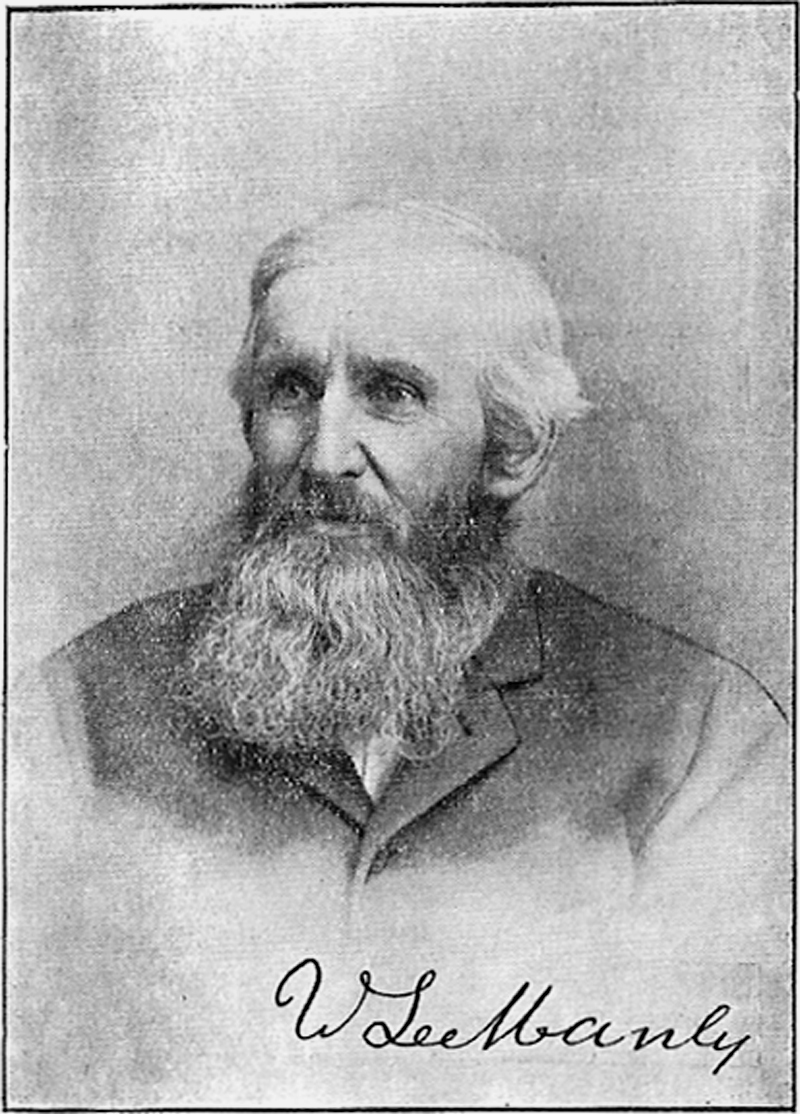
As the 49'ers who arrived in Death Valley started to realize the trouble they were in and panic and desperation started to grow, they broke into smaller groups.  One group consisted of the Arcane and Bennett families and, along with them went the hero of this story, William Lewis Manly.  Like with the rest of the 49'ers, things got desperate for the Arcane and Bennett families.  They headed south through the valley and ended up stranded near the base of the imposing Panamint Range, at what is now called Bennett Spring.   Manly was young, strong and in his prime.  He could have easily abandoned the two families and saved himself.  But, he did not and stayed with them as a loyal friend.  In fact, when he was finally asked, he traveled over 250 miles to Los Angeles for provisions/supplies and all the way back, risking his own life in doing so.  He then led the families out of Death Valley, in essence, saving all their lives.  However, the only reason any of them survived was that they showed up in January.  If it was even slightly later in the year, this could have been an entirely different story.

Artists Depiction of the Manly/Arcane/Bennett Party in Death Valley, the Panamint Range Looms In The Distance

I've visited two areas along what is now referred to as The Escape Trail - the path which Manly took while rescuing the Arcane and Bennett families.  They are both in remote, rugged areas, even today.  But, what a difference a 100 years make.  I visited both of these areas on my dirt bike, with supplies a short distance away in my 4Runner, which was parked near a paved highway, even if a rather lonesome highway.  The first plaque on the left in the image below is in the Slate Range.  The canyons on either side of the crest - Isham and Fish Canyons - are both named after 49'ers that perished there.  The other plaque is at the crest of the Panamints at Rogers Pass.  It is here that either Manly, or John Rogers who accompanied him, took off their hats, looked back and exclaimed, "Good-bye, Death Valley", first providing this place with perhaps a very fitting name.  As Arnold points out, they likely had the beginning of the prayer, "Yea though I walk through the Valley of the Shadow of Death", in their minds.

Memorials Along The Escape Trail ( ET)
It is believed that Manly crossed through Butte Valley.  If he did, he likely traveled the Panamint Crest above Middle Park, which is another spot one can get to these days in a much easier manner, via dirt bike, or 4x4.  It's a beautiful high desert area, with striking views in all directions.

Panamint Crest From Middle Park ( ET)
Butte Valley ( ET)

William Lewis Manly

From Shorty's Well, which is right near Bennet's Well, Arnold goes north through Death Valley, without actually visiting Middle Park and Butte Valley, or the Slate Range.  He was, after all, on the way to Mt Whitney, and needed to resupply at Stove Pipe Wells.

Along the way, he also tells the story of another individual - George Hansen.  What none of the 49'ers knew at the time was that they were all being watched.  They were being watched by the native inhabitants - the Shoshones - that had been living in Death Valley since long before the 49'ers showed up.  They knew how to live off the land, seasonally traveling between the valley in the winter and high up in the Panamints in the summer.  George Hansen was a young Shoshone boy when the "whites" first arrived in the valley.  He and his father could see the 49'ers burning their wagons from high up in the Panamints one night. They traveled down to the valley and could tell they were sick and in trouble.  But, they also feared these strange interlopers and, so, they stayed clear, watching only from a distance.

Tucki Mountain to Stovepipe Wells

Tucki Mountain ranks up with some of my favorite peaks in Death Valley.  I did this hike a little ways back from Skidoo - a route which popular guidebook author Andy Zdon calls an "epic route".  I'm not sure why, as he has several hikes that are more difficult in his guidebook.  Regardless, on his way to Stovepipe Wells, Arnold decides to go straight up and over Tucki from the valley floor, taking what is undeniably the truly epic way to hike Tucki!  If I understood his route, he would have crested out on a ridge above and near this little valley I had to cross on my way to Tucki.  What he probably missed, however, was the neat little cabin barely visible in the photo below.  Can you spot it?  At one time, a lonesome miner called that his home.

Old Martin Crossing ( ET)

Arnold spent the night on Tucki, before heading down the following day.  From the summit of Tucki, one can see the crest of the Sierra in the distance.  I'm glad I still didn't have to hike to Whitney, as the view would have thoroughly discouraged me.  Whitney looks far way in the West, sitting on top of the jagged, snowy Sierra crest, with multiple dry, rugged desert ranges in between that need to be traveled over.  Although, he made no mention of it, I personally found the benchmark on the summit, which was named "DEATH", rather ominous, when I was out there on Tucki all by myself.  Perhaps, Arnold found the view to Whitney a bit more ominous - I know I would have.

Tucki Summit Benchmark, "DEATH" ( ET)

Cottonwood Mountains to The Race Track.

On the way to Stovepipe wells and then off to the Cottonwood Mountains, Arnold expressed a thought I have always wondered about myself.  The miners that stayed in Death Valley had to be there for more than the gold.  The desert is a rough place and there has to be an easier way to make a buck.  Perhaps, this saying from the classic move Lawrence of Arabia sums it up best

"I think you are another of these desert-loving English.  No Arab loves the desert. We love water and green trees, there is nothing in the desert. No man needs nothing."

John LeMoigne, Shorty Harris and some of the early Death Valley personalities must have had much in common with those desert-loving British, like T.E.  Lawrence, because they came to Death Valley and stayed.

LeMoigne stayed in Death Valley for many years, until perishing under a Mesquite with his burros.  He had a lead-silver mine he long maintained in a canyon that now bears his name.  LeMoigne also had prospects scattered all across the desert and was credited as having a "kind of mental diviner's rod" for finding ore.  Surely then, if any man could have "struck it rich" and left Death Valley to live in style, it was LeMoigne.  But, he mostly worked his lead-silver mine and only just enough to subsists and survive.  Like Arnold says, maybe he was poor and stubborn, or maybe he liked being monkish.  Either way, his mysterious ways turned him into a local legend and Death Valley must have held an attraction for him, which kept him there the rest of his years until that fateful day under the Mesquite bush.

John LeMoigne In Skidoo

Arnold has a great Shorty Harris quote in his book:  "Who the hell wants $10,000,000.  It's the game man - the game".  Harris first found the famous Death Valley site called Bullfrog, with his partner Ed Cross.  They found a piece of ore in the vicinity and knew the ground was rich in gold.  They went off to Goldfield sixty miles away to register their claim.  In town, Harris flashed his ore at anyone willing to buy him a drink and within no time started the rush of all Gold rushes.  Shorty Harris was not part of the rush on its way to Death Valley.  He was still in Goldfield in a full swing drinking binge.  When he finally came out of his drunken slumber 6 days later, he found that he sold his claim to Bullfrog for $1000 to the bar keep.  His partner, Ed Cross, made enough money to buy a 120-acre walnut and orange farm near Escondido.  Harris ended up right back in Death Valley, where he spent most of his time for the next 40 years of his life, repeating similar patterns.  So, was Harris an irresponsible drunk?  Or, was he in it for the "game"?  Did he just love life in the desert?  Either way, add his name to the list of those enigmatic characters, which the history of Death Valley seems to be full of.

Shorty Harris and His Mule

Arnold visits several areas along this route that I wish I had better photographs of, but don't.  We took zero photos when we were in Cottonwood Canyon.  We never found the petroglyphs in Marble Canyon. And, we haven't even been to the Ulida Flat area, yet.  I have been to the Racetrack, but was dumbfounded when I realized I had only one crappy picture of the sliding rocks.  Clearly, I need to return and visit all these areas.

Arnold calls the Racetrack the "strangest place he has ever seen".  I didn't realize how flat it was, as it rises only 1 inch over its 3 miles of length.  Rocks move across this flat leaving strange tracks in their wake and nobody knows why, or how, this happens.  Countless teams have been there to study the rocks and the best answer is gale force winds combined with rain and icy conditions. To this day, nobody has ever witnessed a rock move.  Death Valley is full of magic and mystery!

Saline Valley and Up and Over the Inyo Mountains

Saline Valley Dunes, Inyo Mountains ( ET)

I've always held the stories of the earliest miners and settlers to the West with great fascination in my mind.  I think one area that has done that more so than many others is Saline Valley and the Salt Tram on the crest of the Inyos.  Saline Valley is a remote place, even today.  Some consider it one of the most remote spots in the lower 48 and Zdon calls the canyons on the Saline Valley side of the Inyos, "some of the most rugged canyons in the  United States".  Rebecca and I came to Saline Valley a few years back to climb Saline Peak.  The middle of Saline Valley takes about 40 miles of dirt road to get there, regardless of the direction from which one comes.  Saline Peak requires another 11 rough  miles of 4x4 up a corridor on the eastern edge of Saline Valley.  How much more remote was this place back in the early 1900s?


Saline Valley, Inyo Mountains ( ET)

Saline Valley sits at just over 1,000 feet in elevation and the crest of the Inyo Mountains range anywhere from 8000 feet to over 11,000 feet at some of the higher peaks.  Men came to Saline Valley, not only for gold, but mainly for salt.  But, the challenge they faced was how to get this salt out of Saline Valley.  The answer they came up with was a Salt Tram situated atop the Inyo crest at 8700 feet that would transport the salt over 7700 feet up from Saline Valley to the top of the Inyos and then back down over 5000 feet to the other side in Owens Valley, crossing some of the most rugged canyons and desert landscape the west has to offer and all back in the early 1900's.  What an engineering feat!  Not too mention the labor.  Every piece of the tram, from the 54 miles of steel cable, to the 1.3 million board-feet of lumber and the 650 tons of nuts and bolts had to be carried in on the backs of mules.  An additional temporary tramway had to be built just to transport supplies and water in support of the main tramway construction.  It's no wonder, the whole salt adventure never really payed off and the salt tram exchanged hands many times over before eventually being abandoned altogether.

I visited the Salt Tram during the China Lake 350.  This location on the Inyo Crest seemed surreal that day.  We were in a race with some minor storm clouds and fading daylight on our way down the Swansea Grade, as snow flurries dropped around us.  I'd really like to go back, take my time and check out some other areas up there, as well.  Not a very easy place to get to, though.  It's a pretty airy and exciting 4x4 and, even as a dirt bike ride, there is a small challenge, or two.


View Down The Cable Leaving Salt Tram Station Along The Inyo Crest ( ET)

Saline Valley Down Below, As Viewed From Salt Tram Station On The Inyo Crest ( ET)

Historical Photo of Salt Tram Construction


It's stories like the one of the Salt Tram that leave me fascinated.  But, Arnold's book taught me something I was naively unaware of.  Just like the Shoshone in Death Valley, the Saline Valley was already populated before "white gold" was discovered and their land was invaded.  I just come to these places as a hobby in my spare time and extended periods away due to injury leave me feeling down.  About 30 Shoshone lived near Hunter Canyon in Saline Valley, but were eventually displaced.  The land was part of their soul and their soul was part of the land.  They were there when the land was pristine and free.  It's hard to imagine the pain they felt when they were pushed off.  Now, at least I know the whole story.  Manifest Destiny, which drove the relentless march westward, also reached this remote corner of the country, with its tales of tragedy.  In retrospect, I should have known this must have happened.

Arnold goes on to tell the story of his journey across Saline Valley and up and over the Inyos.  I won't spoil any of the details, but suffice it to say it was probably his spiciest adventure of the whole journey!

Owens Valley to Mt Whitney

The history of Owens Valley was once again one of the "whites" coming in and displacing the local Indians -  the Paiutes.  The original settlers in Owens Valley were mostly farmers and ranchers and skirmishes with the Paiutes happened on a regular basis.  However, history here has a bit of an ironic, if not almost karmic, twist to the story.  Several years later, Los Angeles started to boom and the city got thirsty.  William Mulholland helped to build the Los Angeles aqueduct, which slowly siphoned the water from Owens Valley and sucked it dry for any decent farming.  Now, it was the local farmers and ranchers - the "whites" - that were rebelling by dynamiting the aqueduct and even taking over the Alabama Hills Spillway. Eventually, the farmers and ranchers were mostly displaced.  There is still some farming in Owens Valley, but nothing like it used to be.  Owens Lake is all but gone, looking more like a dry lake bed most days.  The wind regularly kicks up dust storms off its surface.

Arnold tells of this history as he descended from the Inyos and made his slow trek across Owens Valley on his way to Lone Pine, before a quick resupply. He then headed out for his final destination - the summit of Mt Whitney.

Mount Whitney From Near The Summit of Thor Peak ( ET)
He headed up as a storm moved out chasing the remaining climbers out of the mountains at the end of the weekend.  It sounded like he spent the night on the Ebersbacher ledges, where he watched the Milky Way light up the sky.   I'll leave out the details of the climb but, suffice it to say, parts of it had my palms sweating a little bit!

Rebecca on the Ebersbacher Ledge System, On a Trip Up The Cleaver Col Drainage ( ET)

Reading Arnold's book made me think of looking through our old photo albums, from the days before we owned a digital camera. I came across this print of myself from when Rebecca and I first climbed Mt Whitney via the main trail in 1999.  Pretty recent history, but digging up this slightly faded print from our old albums of a trip that seems so long ago, almost made me feel like I was looking at one of the historical photos from this blog!  I've avoided Whitney like the plague since then.  Mainly because I don't like the popularity of the peak and the crowds, preferring to go to less crowded summits and also to simply explore new areas we haven't been to yet.  Now, I'm inspired to go back.  I honestly don't know if I can pull off the Bad Water to Whitney journey anymore, but I definitely want to try.  At the very least, I would like to follow the author's footprints up the Mountaineer's Route.  (And, perhaps in better style than last time.  Hard to tell from the photo, but I am close to losing my lunch)

Me On Whitney, 1999 ( ET)

Salt To Summit is a great read and I highly recommend it.  If the romance and adventure of the early West and outdoor adventures stories, in general, hold any personal appeal, I think one would enjoy this book.  Arnold's vivid language and his unique approach to telling the stories by reliving them as best he can, makes for a heartfelt and lively story.

Daniel Arnold, Salt To Summit

References

** Andy Zdon, Desert Summits
** Michel Diggonet, Hiking Western Death Valley National Park